A clean fence looks better and lasts longer. Dirt, water, and bad weather can damage your fence Cleaning and caring for your fence helps it stay strong. Whether you have a wood, plastic, or metal fence, these easy steps will keep it in good shape.
Why Is Fence Cleaning Important?
Fence cleaning removes dirt, mold, algae, and leaves. These things can trap water against your fence. Trapped water can cause big problems later. Cleaning also helps you see small damage before it gets worse. Regular maintenance is especially important if you’ve recently installed a fence, and understanding how to install an aluminum fence can help you keep it in excellent condition for years to come.
In Longmont, fences get a lot of sun, snow, and wind. These things wear down fences quickly. Keeping your fence clean helps it stay strong and look nice.
A clean fence also makes your yard look better. It makes a good impression on people who visit.
How Dirt and Water Damage Fences
Dirt holds water against your fence. Over time, this water can cause rot, mold, rust, and stains. Wood fences are especially at risk because they soak up water.
Mold and algae grow fast in shady areas. They can weaken your fence and make ugly stains. Regular cleaning stops these problems.
How Often Should You Clean Your Fence?
Most fences need cleaning once a year. Some fences may need cleaning more often. This depends on the weather and trees near your fence.
Houses with big trees nearby get more dirt and wet spots. Areas with lots of snow or rain need more cleaning. Check your fence often to see when it needs help.
Cleaning once a year stops many problems. It’s cheaper than big repairs later.
- Signs Your Fence Needs Cleaning
- Look for these problems:
- Green or black spots
- Mold or mildew
- Dirt buildup
- Water stains
- Rust on metal fences
- Faded color
If you see any of these, clean your fence soon.
What Are the Best Fence Cleaning Methods?
The best way to clean depends on your fence type. Different fences need different care.
Start by removing loose dirt and leaves. Then use a cleaning liquid and soft scrubbing. Sometimes pressure washing helps, but be careful.
Cleaning Wood Fences
Wood fences need gentle care. Use a brush to remove loose dirt. Then use a wood-safe cleaner and water to wash away dirt and mold.
Don’t use too much water pressure. Strong pressure can hurt the wood and leave marks. Let the fence dry before putting stain or sealant on it.
Cleaning Plastic Fences
Plastic fences are easy to clean. Soap and water work great for most dirt and stains.
Use a soft brush or cloth on problem spots. Rinse well so no soap stays on it. Regular cleaning keeps plastic fences bright.
Cleaning Metal Fences
Metal fences can rust when water sits on them. Cleaning stops dirt buildup and helps you spot rust early.
Use a gentle cleaner and soft brush. If you see rust, fix it fast before it spreads. Special coatings help protect metal fences.
Why Is Looking at Your Fence Important?
Checking your fence is one of the most important jobs. Small problems are easy to fix if you find them early.
Look for loose boards, cracks, rust, leaning posts, and rot. Small problems become big ones if you ignore them.
Many people only clean their fences. But looking at them is just as important.
What Should You Look for When You Check Your Fence?
Walk along your whole fence. Look for:
- Loose bolts and nails
- Broken boards
- Cracks or splits
- Rotting wood
- Rust spots
- Leaning sections
- Dirt piled up near posts
Write down what you find. This helps you remember what needs fixing.
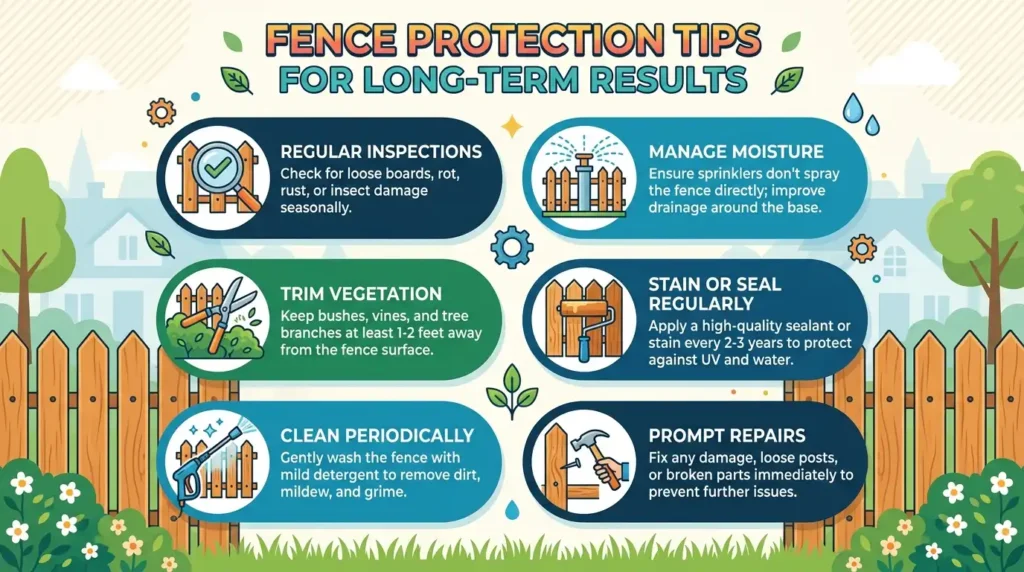
Fence Protection Tips for Long-Term Results
Protecting your fence means more than cleaning. Special treatments stop water and sun damage.
Colorado weather is hard on fences. Sun, snow, and water wear them down. Protection helps stop this damage.
Taking care of your fence now costs less than big repairs later.
Apply Sealants and Stains
Wood fences need stain or sealant. These create a shield that stops water from soaking in.
Putting a new stain or sealant on every few years helps a lot. It keeps your fence looking nice too.
Use products made for your local weather.
Keep Plants Away
Plants and bushes near your fence look nice, but they trap water. Plants stop air from flowing and dry your fence.
Cut back bushes and vines. Space around your fence helps it dry faster after rain or snow.
This easy step stops many problems.
Common Fence Mistakes to Avoid
Even people who care about their fences sometimes do things wrong. Know these mistakes to keep your fence safe.
Good fence care means doing it over and over. Don’t wait until big problems happen.
A few good habits help a lot.
Using Too Much Water Pressure
Pressure washing can work, but too much power hurts wood. It can wash away the protective coating.
Follow the directions. When you’re not sure, use less pressure or wash gently.
Ignoring Small Repairs
A loose board or small crack seems small. But these problems grow bigger.
Fix small problems fast. This stops bigger damage and keeps your fence strong.
Seasonal Fence Care Tips for Longmont
Each season is different for your fence. Changing how you care for it helps it last longer.
Longmont has different weather each season. Each one affects your fence differently. Seasonal care helps stop weather damage.
Taking care of your fence all year long helps it stay nice.
Spring Cleaning
Spring is a great time to check and clean your fence. Winter leaves behind water, dirt, and loose parts.
Look at posts, panels, and bolts carefully. Clean it before putting on stain or sealant.
Summer Cleaning
Strong summer sun can fade your fence and dry it out. Check that the protective coating still works.
Clean away dust and dirt from dry weather.
Fall and Winter Cleaning
Before winter, remove leaves and check drains around posts. Water sitting there can freeze and cause damage.
After big snows, check for leaning sections and water damage.
Conclusion
Professional fence cleaners have special tools and know what they’re doing. They know how to clean different materials the right way. Hiring experts for professional fence installation and maintenance services can help protect your fence from damage and extend its lifespan.
For big yards or really dirty fences, professionals save time and do better work. They might also spot problems you missed.
Many Longmont homeowners get professional cleaning once a year.
FAQ
How often should I clean my fence?
Most homeowners should clean their fence once a year. If you have lots of trees or it rains a lot, clean it more often. Regular cleaning stops stains, mold, and material damage. One cleaning per year works for most fences.
What’s the best way to protect a wood fence?
Clean your wood fence regularly. Check it often. Use a good stain or sealant. These stop water and sun damage. Trim plants nearby and fix problems fast.
Can pressure washing hurt my fence?
if the pressure is too strong. Wood fences get damaged easily. The force can strip the coating and hurt the wood. Use the right pressure and cleaning liquid for your fence type.
What signs mean my fence needs work?
Look for stains, mold, loose boards, rust spots, leaning sections, and cracks. These mean it’s time to fix things. Finding problems early makes repairs cheaper.
Does taking care of my fence make it last longer?
Cleaning, checking, small fixes, and protection all help. A good care plan means your fence looks good for many years.
Is paying for professional cleaning worth it?
For big yards or very dirty fences, yes. Professional cleaners know how to do it safely. They can also spot problems before they get expensive.