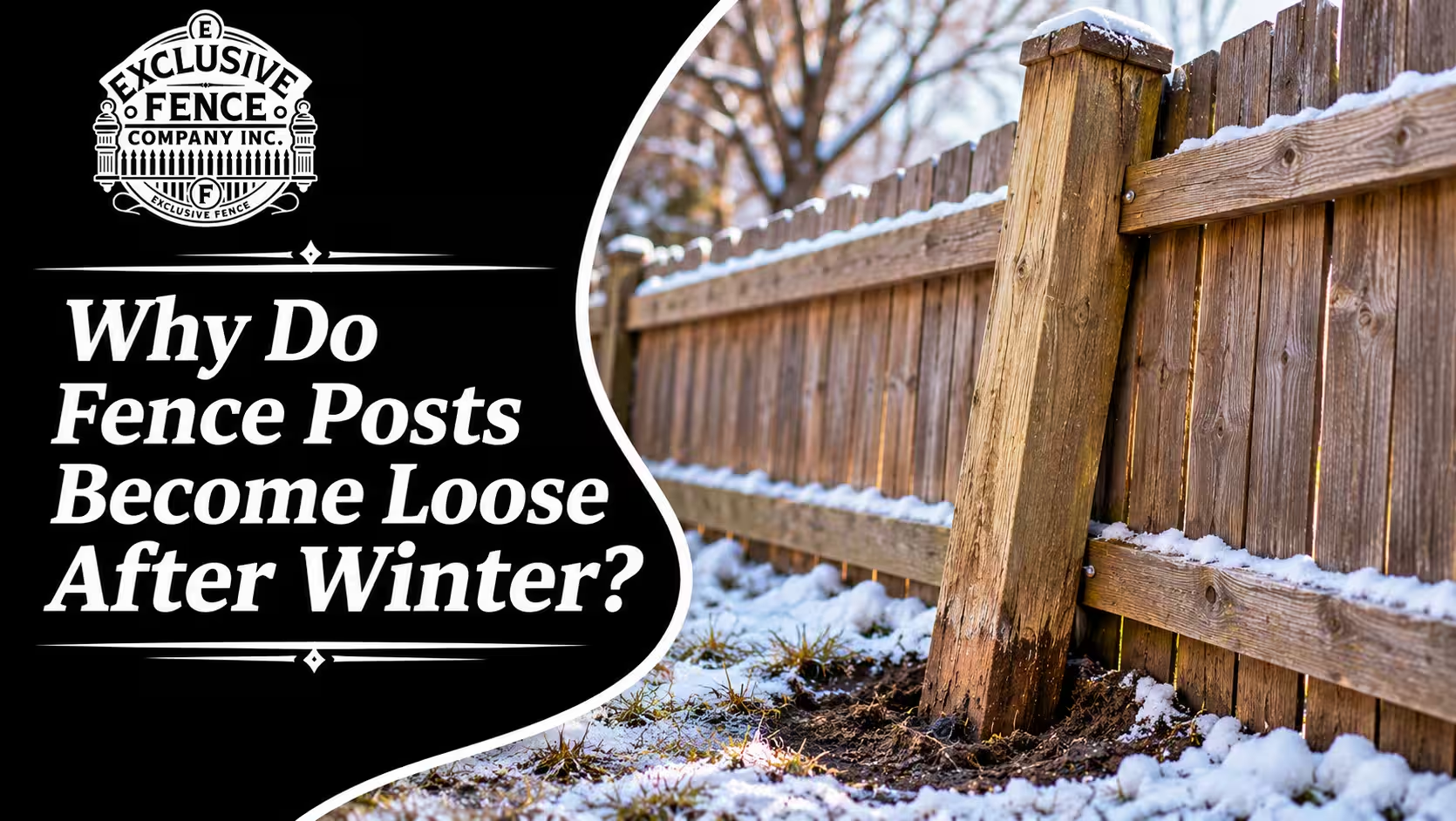
On the first warm weekend in March, you take a stroll around the yard, leaning on a fence post as you always do. It moves. That same hole last fall held up, and now it rocks or tips towards the neighbor’s yard. It is the same with loose fence posts after winter; they typically are clues to what went on under the ground during the winter. The soil contracts and expands, expands and contracts again and again, and then thaws and settles as the concrete footing encasing your post moves with it. Read below to understand how frost heave and freeze-thaw can cause unloading of posts and why there is a need for drainage. You will also learn about troubleshooting, testing, and maintenance procedures, and repair solutions to be knowledgeable about.
What Causes Fence Posts to Become Loose After Winter?
Even if the surface of the ground appears normal, it can change radically with the onset of winter. When there is water in the soil, it freezes and expands. When soil is wet, it expands and contracts as it thaws. Every movement reduces the force holding a post in place. A large percentage of the loose posts can be attributed to one or more of the four causes listed below.
Frost Heave Pushes Fence Posts Out of Position
If water is held in the soil, the frost turns it to ice. Solid water expands when frozen. Ground saturated with moisture, such as in a sandy or loamy soil, will form ice layers, which will lift the ground further. When it is frozen, the soil adheres to the footing and pulls it up. Then the area below is filled with loose soil.
Freeze-Thaw Cycles Disturb the Surrounding Soil
The ground is seldom frozen on Long Island for extended periods. It locks up in a cold snap. A sunny day puts it in a neutral state. It then refreezes again. Round 2 will loosen the soil around the footing even further. As a result, a post tends to bend over each year. The sudden change is typically caused by wind or a broken footing.
Poor Soil Drainage Allows Water to Collect Around Footings
Frost heave is caused by water. Freezing causes very little movement of dry soil. This can be difficult to deal with when the ground around a downspout or a low corner is soggy. Water pools directly around the post base when a concrete footing top has a bowl-like form. Groundwater also softens the soil during the spring. That can be the sole support of a post.
Shallow or Deteriorating Footings Lose Their Support
A shallow post sits entirely inside the layer that freezes each winter. Frost can grip the whole footing. Footings age, too. Thin concrete collars crack. Wood rots where water stays trapped. The right depth depends on your soil, fence type, and local frost depth. No single number fits every yard.
Signs Your Fence Posts Have Shifted or Lost Stability
A slow walk along the fence in early spring shows most problems. Go once the ground has dried a little. One symptom alone won’t always explain the cause. Several together usually point you the right way. Stop at each post and look for these clues.
- Wobbly fence posts: The post rocks under a gentle push.
- Leaning fence posts: It no longer looks plumb down the line.
- Changes in fence alignment: Rails dip, or panels sit crooked.
- Raised or disturbed soil: The base looks puffed up or cracked.
- Visible footing movement: Concrete sticks up or pulls away from the dirt.
How to Inspect Loose Fence Posts After Winter
A careful look tells you what really failed. Maybe the soil moved. Maybe the footing cracked. Or the post itself is breaking down. Each problem calls for a different fix. All you need is your hands and a screwdriver. Work one post at a time.
Check Whether the Post Moves at Ground Level
Push gently at waist height. Watch the base, not the top. A post that pivots at ground level has a loose footing or loose soil. Never yank on a leaning post or climb on it. A weak section can fall. Then test the neighbors. A whole wobbly run means trouble along the line.
Examine the Concrete Footing and Surrounding Soil
Brush back the dirt at the base. Look for cracked concrete or a gap around the footing. A footing poking above grade suggests heave. A muddy ring days after rain points to drainage trouble. You only see the top few inches, though. Hidden cracks or rot may wait below.
Check the Post Material and Fence Connections
On a wood fence, press a screwdriver into the post at ground level. If it sinks in easily, rot has set in. On vinyl, panels slipping from their brackets usually mean the post shifted. Check the hardware too. A loose screw or sagging hinge can make a sound post feel wobbly.
How Can You Repair Fence Posts That Become Loose After Winter?
The fix has to match the cause. Otherwise, you’ll likely repeat the job next spring. The right repair depends on whether the problem is a loose bracket or a rotted post base. Start with what you found during your inspection. Then pick the option below that fits. Some jobs are quick. Others mean digging out the post.
Reset a Post When Its Footing Has Shifted
Resetting works when the post is sound, but its footing has heaved or tilted. Dig out the post. Correct or remove the old concrete. Set the post plumb in a footing that suits the site. Don’t simply add new concrete on top of the old footing. Frost can still grab that base.
| Call 811 Before You DigBuried utility lines can sit closer to the surface than you expect. Call 811 a few days before digging to have underground utility lines marked. |
Correct Drainage Problems Around the Post
Fix pooling water first. Skip this step, and a reset post will heave again. Regrade the soil so it slopes away from the base. A short downspout extension can help a lot. Send that water into your own yard. Never point it toward a neighbor’s property or a building.
Reinforce a Post When the Existing Support Is Still Sound
Reinforcement suits a minor wobble when the post and footing are solid. A steel repair bracket bolted beside a wood post can stiffen the base. It won’t fix a footing that has cracked through or tilted far. A temporary 2×4 brace only holds things upright until the real repair.
Replace Posts With Severe Rot or Structural Damage
Replace a post when rot has reached the wood at ground level. A post-split clean-through needs the same answer. So does a broken footing. At that stage, a reset or brace only props up a failing part. You’d still see the same lean next spring.
How to Prevent Fence Post Movement During Future Winters
Long-term stability starts with how the posts sit in the ground. Water comes next, since it decides how hard the soil heaves. Regular checks round it out. You can’t control the weather. You can control most of the rest with a few easy habits each year.
- Keep soil sloping away from each post base.
- Clear standing water and clogged downspouts before the ground freezes.
- Keep garden-bed runoff away from posts.
- Walk the fence line in late fall and early spring.
- Fix a small lean before another winter makes it worse.
The installer sets each post’s embedment depth and footing design during fence installation. That setup matters when movement keeps coming back. New posts need enough depth for local frost conditions. Their footings need to suit the soil. If those basics were missed, yearly upkeep alone won’t stop the lean.
When Should You Repair a Loose Post or Replace It?
Look at the pattern first. One wobbly post with firm neighbors usually has a local cause, like a cracked footing. Resetting or reinforcing it may be enough. Several posts leaning the same way point to drainage or shallow footings along the run. Fixing them one by one won’t hold. Rot, broken footings, and posts that move every spring all push toward replacement.
FAQs
Can frost heave lift a fence post out of the ground?
It can raise one. Frozen soil grips the post or footing as the ground swells. During the thaw, the post may not settle all the way back. Over several winters, it can creep higher. Most posts don’t pop out completely, though. They end up leaning or sitting high.
Should I repair a loose fence post in spring?
Spring is a great time to inspect. Winter damage is fresh and easy to spot. Wait to dig until the ground has thawed and drained. Soaked soil makes a firm footing harder to set. A post leaning toward a walkway or pool is different. Brace it right away.
Can a loose fence post be fixed without replacing it?
Often, yes. A solid post on a shifted footing can usually be reset. A slight wobble over an intact footing may only need reinforcement. Replacement wins in two cases. One is rot at ground level. The other is a broken footing. Both mean the support has failed.
Final Thoughts
Fence posts loosen after winter because the ground beneath them moves. Frost heave lifts the soil. Freeze-thaw cycles loosen each footing. Poor drainage makes both worse. Shallow or aging footings lose their grip. Before you pick a fix, check the post. Then check its footing and the soil around it.
Exclusive Fence Company INC works with homeowners in Brookhaven and across Long Island. The team installs wood, vinyl, PVC, and aluminum fencing. It also offers chain-link, deer, and pool fencing. If winter left your fence leaning or loose, reach out. We’ll talk through what you’re seeing and the options that fit your yard.