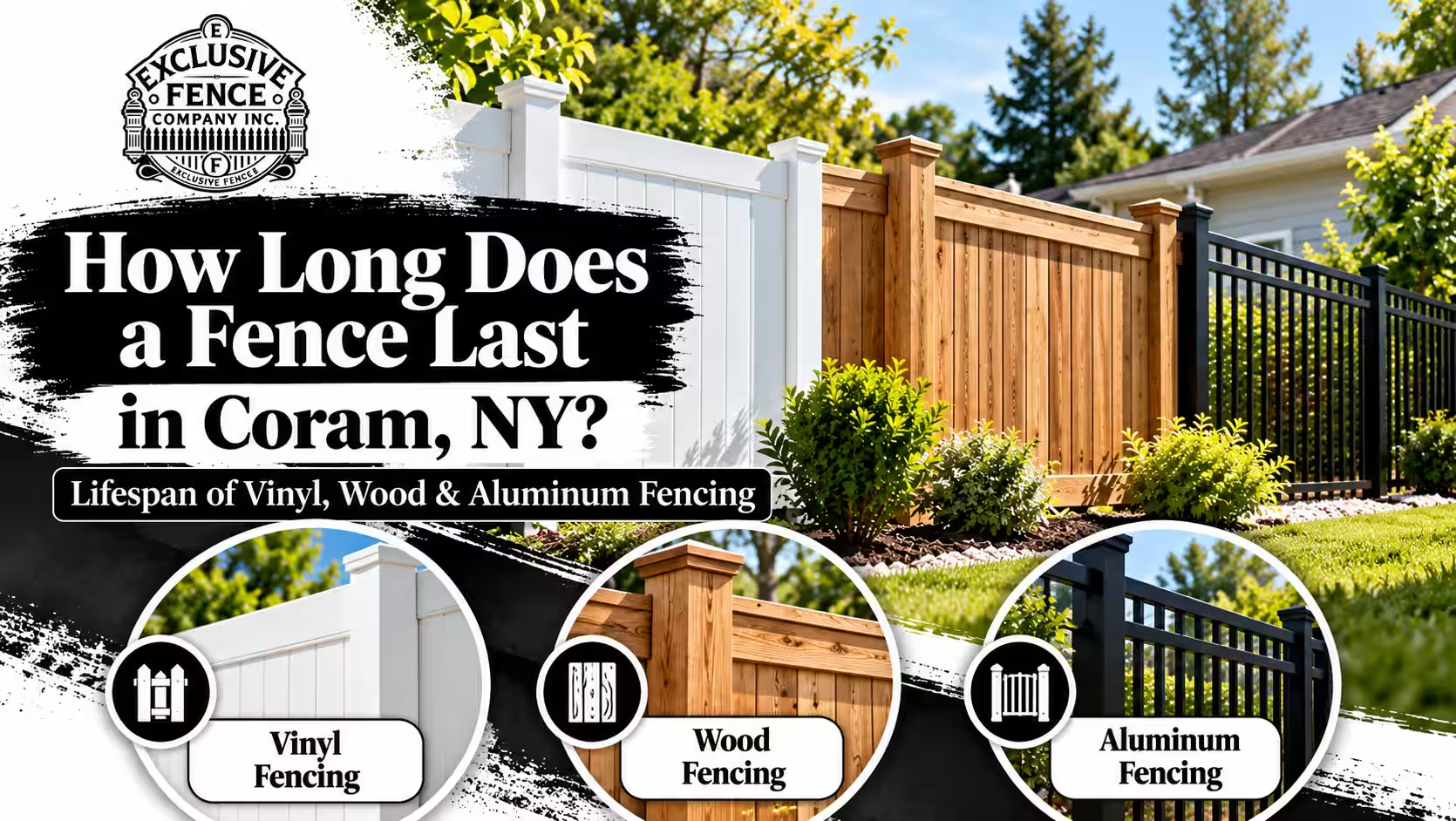
You paid good money for that fence. Now you want to know how long it will stand before it needs major work. Here’s the short answer on fence lifespan in Coram, NY. A good vinyl fence often gives you 20 to 30 years. Wood usually lasts somewhere between 10 and 25 years. Aluminum can run 30 to 50 years or more. Material is only part of the story, though. How the posts were set matters a lot. So does how much sun and water hit the fence and how often someone actually checks on it. This guide covers each material, the upkeep it needs, and the signs your fence is getting old.
How Long Does a Residential Fence Typically Last?
Every material ages in its own way. Some need a weekend of work every couple of years. Others need little more than a rinse with the hose.
| Fence material | Approximate lifespan | General maintenance |
| Vinyl | 20–30 years or longer | Low |
| Wood | Around 10–25 years, depending on wood type and care | Moderate to high |
| Aluminum | Around 30–50 years or longer | Low |
Treat those numbers as ballpark figures, not promises. A thick, well-built vinyl panel will outlast a thin budget one. Install quality and product-grade push the real number up or down. Your yard’s conditions and your upkeep do too.
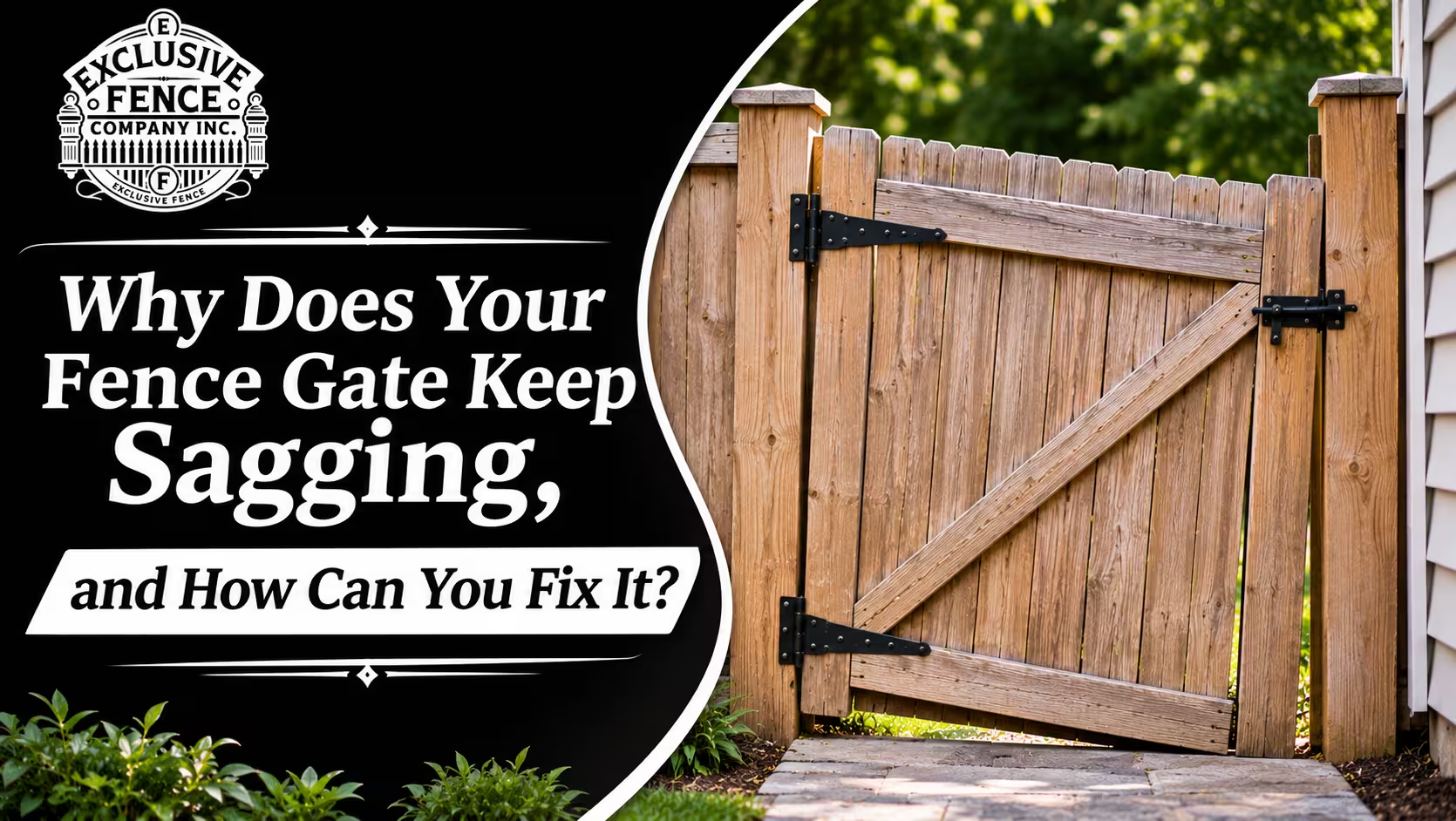
The fence also doesn’t wear out evenly. Posts take the most abuse because they sit in the ground year-round. Gates swing thousands of times and pull hard on their hinges. Screws and brackets can loosen long before the panels look tired.
How Long Does a Vinyl Fence Last in Coram, NY?
Vinyl is popular here because nobody has to paint or stain it. A quality vinyl fence typically lasts 20 to 30 years, sometimes longer.
What Affects Vinyl Fence Lifespan?
Not all PVC fencing is built the same. Thicker walls, internal reinforcement, and UV inhibitors make a real difference over time. Cheaper panels tend to flex or yellow sooner. A vinyl post that isn’t set deep and solid will start to lean. That strains every panel attached to it. Years of strong sun can fade or discolor vinyl. Cold makes it stiffer and more likely to crack when something hits it. A snowblower throwing ice can split a frozen panel. Vinyl won’t rot like wood. It can still crack, discolor, or come loose at the connections.
How to Maintain a Vinyl Fence
Wash it now and then with mild soap and a soft brush. Walk the line a couple of times a year and push on each post. Check the gate hardware and look for cracked panels or rails slipping out of their brackets. A loose rail is a quick fix today. Leave it alone, and it can turn into a sagging section.
How Long Does a Wood Fence Last?
Wood is the hardest material to pin down. Its lifespan depends on the species, how wet it stays, and how well it’s maintained. Most wood fence lifespan estimates fall between 10 and 25 years.
How Wood Type and Moisture Affect Durability
Pressure-treated pine resists rot and insects, but it isn’t immune. Cedar has natural oils that help it fight off decay. Many cedar fences outlast treated pine, though results depend on the grade and the conditions.
Moisture is wood’s biggest enemy. Boards that stay damp soften and rot. Posts get it worst, right where they meet the soil. Poor drainage around the base keeps that wood soaking for days. Weakened boards then invite insects, splitting, and warping.
Wood Fence Maintenance That Helps Extend Its Life
Look over the boards and posts at least once a year. Poke soft-looking spots near the ground with a screwdriver. If it sinks in easily, rot has started. Stain or seal the fence when water stops beading on the surface. How often depends on the wood species, the product, and how much sun the fence gets. Trim back shrubs and vines so the wood can dry out. Replace bad boards early and fix wobbly posts before they drag a section down.
How Long Does an Aluminum Fence Last?
Aluminum is the long-distance runner of the three. A well-installed aluminum fence often lasts 30 to 50 years with very little routine work.
Why Aluminum Can Last for Decades
Rust isn’t the threat it is with ordinary iron or steel. Most residential aluminum fencing also comes with a factory finish, often powder coating. That coating protects the metal and holds the color. Quality still matters. Heavier rails and pickets resist bending better, and a tougher finish fights chips and fading longer. Posts need to be set firmly, just like any other fence.
Don’t mistake aluminum for indestructible. A fallen limb or a car bumper can bend a section. Scratches can wear through the coating. Gates can sag after years of use.
How to Maintain an Aluminum Fence
Wash it with mild soap and water once or twice a year. Check posts for movement and make sure gates still latch cleanly. Tighten loose screws or brackets. Touch up chips with a product made for that coating. After a big storm or a hard hit, walk the line and look for bent pickets or shifted posts.
What Factors Affect Fence Lifespan in Coram, NY?
Two fences made of the same material can age very differently. One looks great at 15 years, while the other is falling apart. Here’s what usually explains the gap.
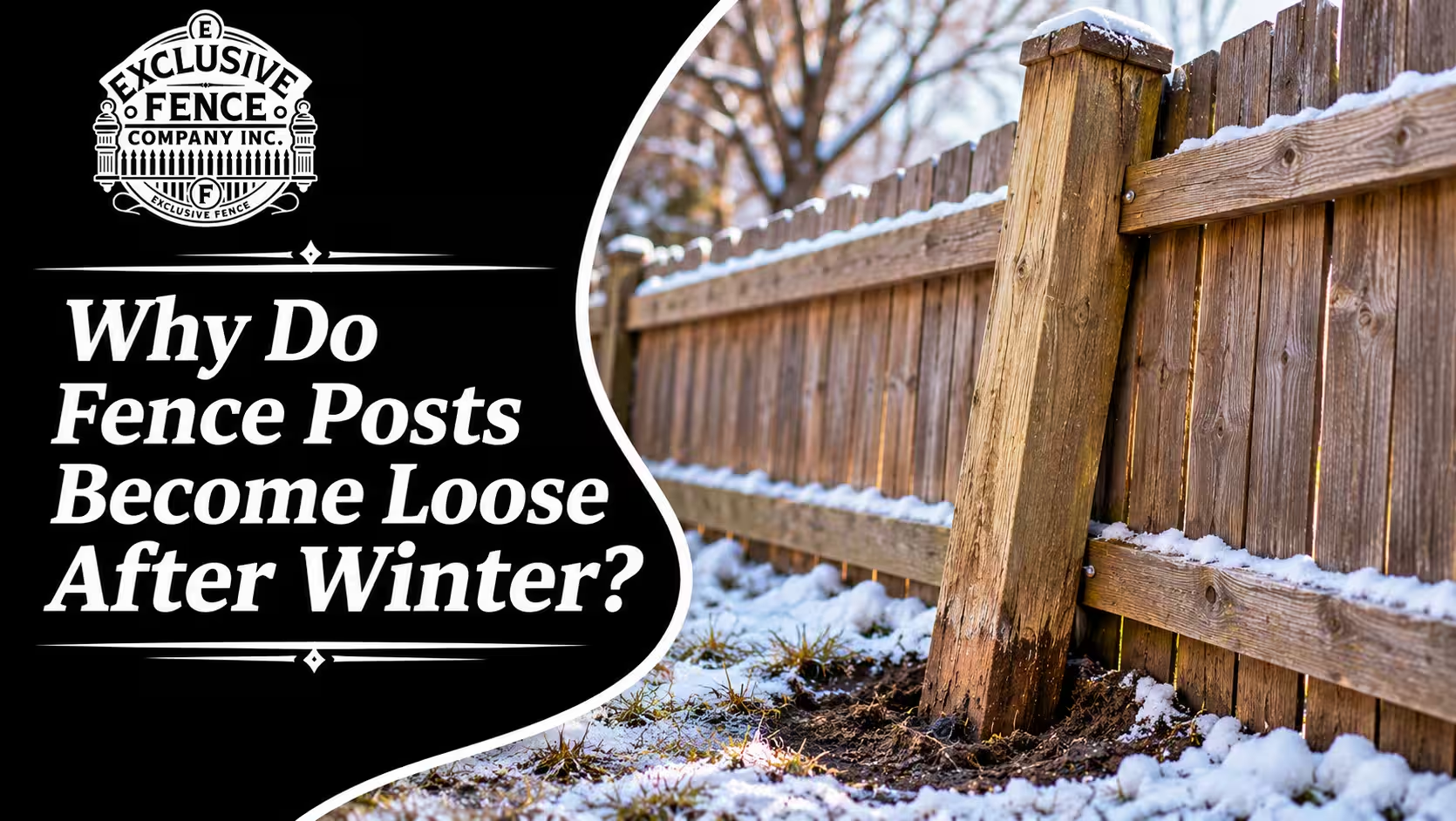
- Weather exposure: Coram sees hot, humid summers, severe nor’easters, and winter soil freezes down to 36 inches. Sun fades and finishes. Coastal wind and frost heave posts year after year.
- Moisture and drainage: Water trapped near post footings in local sandy loam rots wood fast and expands concrete footings during winter freezes.
- Installation quality: Posts need proper depth and solid footing. The right fasteners keep panels square and tight.
- Material quality: Thicker vinyl and better-grade lumber outlast bargain versions. Tougher coatings help aluminum hold up.
- Maintenance habits: A yearly walk-around catches small problems early. Ignored fences fail faster.
- Physical damage: Storms drop branches. Mowers bump posts. Kids and dogs lean on gates. It all adds up.
What Are the Signs That an Old Fence Needs Replacement?
Age alone won’t tell you it’s time. A 20-year-old fence in good shape can keep going, while a 10-year-old fence with rotted posts may be finished. Judge its stability and whether it still does its job.
- Rot, splitting, or crumbling boards across much of a wood fence
- Posts that lean or no longer hold the fence firmly
- Several cracked or badly damaged vinyl panels
- Bent aluminum sections, worn finish, or loose connections in multiple spots
- Repairs that keep failing or the same problem coming back
- A fence that no longer fits how you use your yard
One broken board or a single cracked panel is usually a repair job. Replacement makes more sense when damage is spread out, the structure feels shaky, or you’re patching the same fence every season. If your fence is showing several of these warning signs, our fence replacement guide for Coram homeowners explains how to assess the damage, compare replacement costs, and choose suitable materials.
How Can Homeowners Extend the Life of Their Fence?
Small habits buy you years. Most fence problems start small and grow quietly, so catching them early is the whole game.
- Walk the fence a few times a year and check the posts, panels, gates, and hardware.
- Cut back plants and clear out debris that holds moisture against the fence.
- Clean it with a method that suits the material.
- Stain or seal wood when it needs it, following the product’s directions.
- Fix loose parts and cracks right away.
- Look the fence over after big storms or any hard hits.
Each material has its own needs, and every product is a little different. Read the manufacturer’s care instructions for your fence and stick to them. For more practical upkeep advice, our fence cleaning and maintenance tips explain how regular care can help prevent common fencing problems.
Frequently Asked Questions
These quick answers cover what homeowners ask most about fence life expectancy and aging fences.
Which Type of Fence Lasts the Longest?
Aluminum and vinyl both tend to outlast wood, and either can give you decades of service. There’s no universal winner, though. A cheap aluminum fence on wobbly posts won’t beat a well-built vinyl fence. The product and the install decide a lot. Your upkeep and your yard decide the rest.
How Often Should a Fence Be Inspected?
Give it a good look at least once or twice a year. Check it again after any big storm or impact. Older fences and wood fences deserve more frequent attention, especially in wet or exposed spots.
Should I Repair or Replace an Aging Fence?
Repair it when the damage is limited to a small area. Consider replacement when rot or cracking is widespread and posts are failing. The same goes for fixes that keep falling apart. Judge the fence by its overall condition, not just its age.
Final Thoughts
Vinyl, wood, and aluminum each run on their own timeline. Wood needs the most care. Vinyl and aluminum usually last longer with less work. Product quality and installation shape how long any fence holds up. Weather and upkeep matter just as much. Regular checks catch trouble before it spreads.
Exclusive Fence Company INC installs vinyl, wood, and aluminum fencing for homeowners in Coram and nearby Long Island towns. If your fence is showing its age, visit our website or call 631-946-4740 to request a free quote.