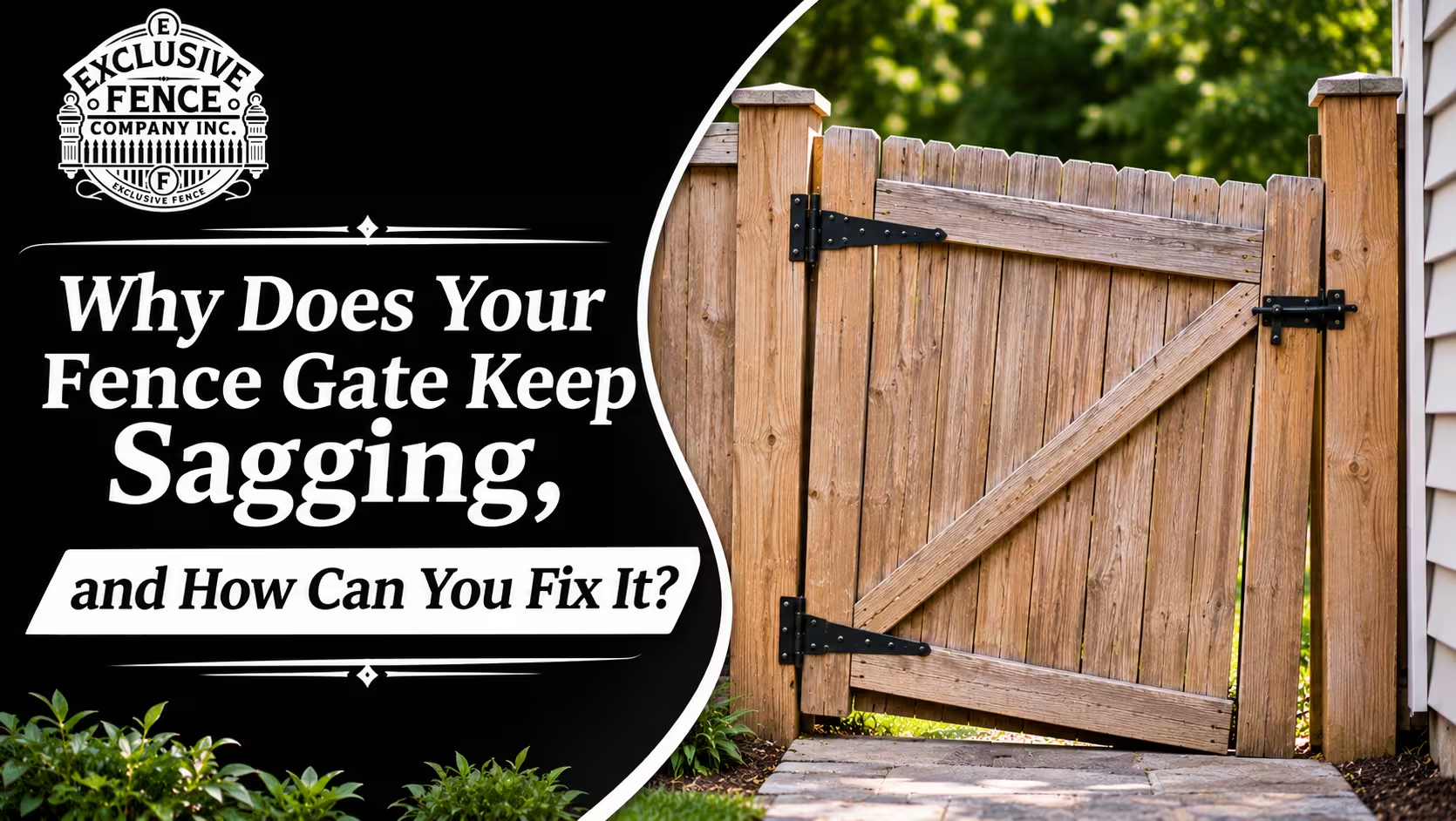
Your side gate used to open with one hand. It now is scraping the walkway, and the latch no longer lines up with the catch. A sagging fence gate occurs when the hardware, frame, or posts supporting the gate wear down or shift out of alignment over time. The problem typically remains small. But a loose hinge screw continues to loosen, and a dragging bottom edge begins to wear quickly, and it’ll turn into a post or frame repair. A gate that doesn’t latch doesn’t do its actual job, such as having a dog’s yard or closing off a pool area.
The upcoming sections discuss some of the most common causes, how to quickly check your own gate, and indications that you may need structural work.
What Does a Sagging Fence Gate Look Like in Everyday Use?
Most homeowners feel the problem before they understand it. The gate just gets irritating. You start lifting it. You kick the bottom rail. You lean on the frame to make the latch catch.
- The latch-side corner hangs lower than the hinge side.
- The bottom edge drags and leaves a worn arc in the dirt or concrete.
- The gap at the latch post looks wider up top than down low.
- The latch bolt sits under its receiver, so the gate stops short or pushes past.
- The gate catches against the post partway through its swing.
Those symptoms do not share one cause. That is why guessing wastes an afternoon. A gate dragging on the ground might come from a drooping frame. It might come from a leaning post. Or the walkway under it settled.
What Causes Fence Gate Alignment Problems?
Gate sag occurs in one of four locations. Hardware. Frame. Post. The weather and the original install. Each one leaves its own fingerprint, and reading that fingerprint keeps you from fixing the wrong part.
Loose Hinges and Worn Gate Hardware
Hinges hold the whole gate on a handful of small fasteners. Years of swinging work them loose. However, in wood, the screw holes expand until they no longer fit. Damage from wear of gate hardware works the same way from the inside. Pins and barrels get worn and create play, which changes the alignment of the gate hinges. A loose gate hinge can cause a perfectly functioning gate to fall down.
Gate Post Movement and Weak Support
The hinge post works harder than any other post in the fence. It falls over on soft ground. A shallow footing will easily shift under Long Island’s winter freeze-thaw cycles and coastal ground moisture (frost heave). Gate post movement pulls the gate down and sideways at the same time, which puts the latch out of reach. No hinge adjustment fixes that. Fence post stability is what creates real structural gate support.
Gate Frame Sagging and Uneven Weight Distribution
A gate frame is a rectangle that wants to become a parallelogram. Gravity pulls hardest at the corner farthest from the hinges. Diagonal bracing fights back by transferring weight—either with a rigid compression brace running up from the bottom hinge to the top latch or a tension cable running down from the top hinge to the bottom latch. A frame without bracing racks out of square slowly. Heavy infill or added panels change gate weight distribution and speed the whole thing up.
Weather-Related Movement and Installation Defects
Your gate’s sag will be based on the material it’s made of. Wood is affected by seasonal changes. This helps to loosen joinery and back fasteners out. Vinyl and metal maintain their shape but may be affected by rusted hardware or a post that has moved. There are also gate installation faults that are only evident years after the fact. A gate that is hung out of square is dropping early.
What Should You Check Before Attempting Sagging Gate Repair?
Find out what moved before you pick up a wrench. A tipping post and a set of stripped hinge screws look nearly identical from ten feet away. The two repairs have nothing in common. Stand at the gate, swing it slowly, and watch for the spot where the movement begins.
| What you notice | Where to inspect | What it may indicate |
| The gate hangs lower on the latch side | Gate frame and hinge positions | Frame or alignment issue |
| The gate moves at the hinge side | Hinges and mounting fasteners | Loose or worn hardware |
| The gate post appears tilted | Gate post and surrounding ground | Post movement or instability |
| The gate rubs against the ground | Bottom clearance and post alignment | Uneven positioning |
| The gate does not meet the latch | Latch and gate alignment | Position or clearance problem |
Treat the table as a direction, not a diagnosis. Two problems often travel together. A racked frame will chew up its own hinge screws given enough time.
How Can You Make Minor Fence Gate Adjustments?
Sometimes the smallest alignment issues have the smallest solutions. Before attempting any minor adjustments, confirm these three initial conditions. The post is upright. The frame remains square. There is also a fastener remaining at the hinge mounting points. If the first fails, proceed to the next section.
- Inspect the gate before you change anything. Pin down the exact spot where the gate drops. Then look over the frame joints and the post for cracks or rot.
- Check the hinge fasteners. Hunt for backed-out screws and chewed mounting holes. Tighten only where the fastener and the wood around it are both still sound.
- Review hinge alignment. Some gates use adjustable gate hinges that allow a little repositioning. The range depends entirely on the hardware you have.
- Check the latch and gate clearance. See whether the latch bolt now meets its receiver. Make sure the bottom edge has enough gate clearance to swing free.
- Test the movement. Open and close the gate several times at a normal pace. Watch for the original drag or the latch misalignment coming back.
| Before You Buy an Anti-Sag Gate KitAn anti-sag gate kit uses a steel cable and a turnbuckle to pull a racked frame back toward square. It helps a frame that has lost its shape. It does nothing for a leaning post. It does nothing for hinge screws that no longer hold. |
When Does a Sagging Gate Need Structural Repair?
Some gates are past the point where hardware tweaks accomplish anything. The support system itself failed. The gate is simply the part you can see.
- A gate post that leans, shifts underfoot, or no longer holds the gate steady.
- A gate frame that cracked, warped, or went noticeably out of square.
- Hinge mounting points or fasteners that will not hold securely anymore.
- A gate that keeps dragging after reasonable minor adjustments.
- Any case where bracing or post stabilization looks necessary.
Start these jobs with an assessment, not a screwdriver. Gate post repair usually means resetting or replacing the post. Gate frame reinforcement means rebuilding the frame’s geometry. Keep tightening a failing structure, and you strip the sound material that is left, which gives professional gate repair less to work with.
What Helps Prevent Fence Gate Sagging From Returning?
Gates give plenty of warning before they quit. A few minutes of attention twice a year catches most of it early.
- Check hinge fasteners and hardware for looseness, rust, and wear.
- Watch the hinge post for a new lean or soft ground at its base.
- Clear built-up soil and mulch away from the bottom clearance.
- Reseal or repaint wood on schedule. Treat corrosion on metal hardware.
- Look over the frame joints and bracing while you are already out there.
Frequently Asked Questions
Three questions come up more than any others once a homeowner starts studying a drooping gate.
Can a sagging fence gate be fixed without replacing the entire gate?
Usually, yes. Repair makes sense while the frame holds its shape and the post stands firm. The hinge mounting points also have to take a fastener. Replacement becomes the better call once rot or racking has gone past straightening.
Can a leaning gate post cause the gate to stop closing properly?
Yes. It ranks among the most common reasons. The gate hangs square to the post, so tipping the post tips the gate with it. The latch bolt drops below its receiver. Adjusting the hinges only moves the gate further out of line.
Does tightening loose gate hinges always fix a sagging gate?
No, and this is where weekend repairs go sideways. Tightening works when fasteners are backed out, but the material around them stays solid. It does nothing for a racked frame or a moving post. Repeated tightening in stripped holes damages the mounting a little more each time.
Final Thoughts
Four things drop a gate out of line. Loose hardware. A racked frame. A shifting post. Support that was never sized for the weight it carries. Find the real cause first, then choose the fix.
Exclusive Fence Company INC. works out of Brookhaven, NY, and builds for homeowners across Long Island, NY. A gate performs only as well as the fence line and posts around it, which is why careful fence installation matters from day one. Homeowners planning a fencing project can reach out at 631-946-4740 to talk through the options.